Wednesday, August 29, 2018

UK: The 'Spice' Drug Crisis


Crackdown on Spice drug in Lincolnshire - ITV News - 13 Aug 2018 (2:39 min) https://www.youtube.com/watch?v=czzRh8vuDE4

The drug “spice” is increasingly popular among the most vulnerable groups in Britain—including the young, homeless and imprisoned.

The drug has horrific effects, with users, often homeless, invariably found in a semi-comatose state, slumped in the centre of cities such as Manchester and Sheffield.

Although the drug was designed to be a harmless alternative to cannabis, it is anything but. Known by a multitude of other names such as K2 and fake pot, spice is a mixture of herbs and synthetic cannabinoids, intended to mimic the effects of cannabis.

Effects range from anxiety to paranoia to hallucinations; with users exhibiting violent behaviour and feeling brain-dead, hence the label “zombie drug.” Spice can also raise blood pressure, sometimes leading to heart attacks and even death.

One of the factors contributing to the dangers of spice is the fact that its production does not involve a controlled environment and it is not professionally tested, which means that any potentially harmful effects of the drug are unknown until it is taken. Due to its ever-changing composition, users are often unaware of the chemicals it contains.

Spice is among a multitude of cheap, synthetic drugs that are widely accessible and popular with vulnerable layers. These include the stimulant “monkey dust,” available for as little as £2, that causes severe hallucinations, paranoia and a loss of sense of pain. Emergency services spoke of a monkey dust “epidemic” in the city of Stoke-on-Trent, with users exhibiting dangerous behaviour such as jumping off buildings and running into traffic.


Staffordshire Police report they have taken 950 monkey dust related calls in the last three months alone. Its use has led to several deaths, with one 54-year-old man, Anthony Pepper, found dead by his girlfriend with packets of the drug in his hand. A 35-year-old man, John Rigby, died after he took the drug and climbed over a safety barrier onto the A50 road and was hit by a truck as he tried to weave through oncoming evening traffic.

Although the Psychoactive Substances Act 2016 made the production and supply of psychoactive drugs such as spice illegal, manufacturers have gotten around this by changing ingredients.

A paper, “Adding spice to the porridge,” by researchers at Manchester Metropolitan University noted that 60-90 percent of prisoners were regular spice smokers. Addiction to spice in prison often leads to addicts amassing huge debts to dealers and becomes a source of violence. In an indication of the social crisis, some prisoners are deliberately getting themselves arrested just to smuggle spice back into prison to repay debts or make money.

Interviewed by Vice magazine, Andy, who had been released from prison recently, said, “You make sure you are plugged when you go and commit a crime, in case you go straight back in. So you go with spice up your arse for a burglary. You deliberately get yourself arrested or break your license so you can go back in jail and sell spice.”

Users said the drug makes them feel happy and that they experience a “blackout” when taking it. Speaking to Daily Star about his spice use Dan Nicholson, a 31-year old homeless man, said, “I did them [legal highs] once when they were legal in shops [before 2016]. I had a really bad experience. I blacked out for six hours. I woke up not knowing who I was, where I was or anything.” He had lost his job, which led to his eviction from his flat.


Another spice user, Jed, who has been homeless for 20 years, said, “Yes I take spice, but who wouldn’t if they were living my life? It makes me feel good, it puts me to sleep, it blocks stuff out. It passes the time, and I have a lot of that.”

Dr. Robert Ralphs, a lecturer and researcher at Manchester Metropolitan University, says that prisoners use the drug to “kill time” and that it provides a “warm blanket” that apparently gives a sense of comfort and security to those experiencing the most insecure conditions.

The prevalence of the drug and the correlation of homelessness with its use highlights that the roots of the spice pandemic are social, not individual—homeless and prison-bound people use the drug to ameliorate the material conditions in which they find themselves.

A 2015 report carried out by the Cambridge Centre for Housing and Planning Research estimates that around 35,000 young people are homeless at any one time across the UK. Moreover, 26 percent of young people surveyed by the study said that they had slept rough, constituting the “hidden homeless.”

Last month, a House of Commons briefing on youth unemployment said that 524,000 young people aged 16-24 were unemployed. Although official statistics show unemployment is decreasing, the number of “hidden” unemployed—those not in education, employment or training (NEETs)—is increasing. The Office for National Statistics (ONS) estimated: “There were 808,000 young people (aged 16 to 24 years) in the UK who were not in education, employment or training (NEET) in January to March 2018. The number increased by 14,000 from October to December 2017.”

Not only is unemployment widespread, so is insecure work on low pay. According to the ONS, the number of zero-hour contracts rose by 100,000 to 1.8 million in the UK in 2017, with prevalence among youth, students and women. Zero-hour contracts are those in which the employer is not obliged to provide a minimum number of hours for a worker.

With uncertainty over whether they will be able to provide for themselves, people on zero-hour contracts are 50 percent more likely to have mental health problems.

Last week the Guardian reported that, according to NHS figures, 400,000 under-18s were in contact with mental health services. Although these numbers are rising, constant cuts to the NHS mean that less help is available to match the demand. There has been a 30 percent fall in the number of hospital beds for the mentally ill since 2009. Young people must wait for exorbitant amounts of time to access services and, at times, the hardships and pressures upon youth are so great that some decide to end their own lives.

The global capitalist crisis finds youth everywhere struggling to get by, with the resort to drugs, including spice, a desperate attempt at escaping their situation.

The New York Times reported that in Brooklyn, 33 people were suspected of overdosing on spice in just one day in July. Witnessing three spice users collapse on his way to work, Brian described he scene to the NYT as something “out of a zombie movie, a horrible scene.”

In the richest country in the world, a health catastrophe is steadily unfolding. In 2016, drug overdoses accounted for 64,070 deaths and more Americans have died from drug use in this century than in all of America’s wars. This disaster likewise has its roots in unemployment and poverty, as the country’s working class has been bled dry by the profit hungry capitalist elites.

In Australia, the drug “ice”—otherwise known as crystal meth—gained popularity, as shown by a study by the Medical Journal of Australia, which found that the number of regular ice users aged 15-34 doubled over a five-year period from 2009 to 2014. “These are young people whose lives are very precarious. We can’t just give them drug treatment ... and then send them on their way,” said Dr. Nathan, a researcher from the University of New South Wales in Australia.

In South Africa, which has the second highest youth unemployment in the world, 80 percent of male youth deaths are alcohol or drug related, according to the SACENDU project. This correlates with the hardships and a lack of future that youth face.

In the bourgeois media, the growth of the use of spice and similar drugs is never linked to the fundamental social problems that underlie any addiction because doing so would mean criticising the system they defend. In typical disdainful fashion, David Nutt of the Guardian exclaimed, “Spice ruins lives and costs taxpayers a fortune.” It is undoubtedly the case that the National Health Service and emergency services, already overwhelmed by a chronic lack of funding, are struggling to cope with an influx of spice users.

But such commentary only serves to channel the outrage at the pillaging of the NHS and other services away from its source in the capitalist system, based on the accumulation of vast profits for the owners of the means of production, whilst condemning the producers of the wealth of society—the working class and its future generations—to a life of poverty, disease and ignorance.

(Plant grown cannabis sativa vs 'spice' drug of unknown chemical composition)

Terrifying Videos Reveal the Dangers of Synthetic Weed - Inside Edition - 7 Aug 2015 (2:39 min) https://www.youtube.com/watch?v=VqOQOE423kw

Sunday, August 26, 2018

Warmonger - John McCain Drops Dead - 25 Aug 2018


by Jim Carey Compiled Earlier this year.... https://geopoliticsalert.com/history-john-mccain-war

...............


Earlier this week notorious war hawk US Senator John McCain (R-Az) was diagnosed with brain cancer. While the liberal and conservative establishments are sending their regards, Geopolitics Alert instead compiled a list of reasons why we don’t care about McCain.

The list is, of course, a history of all the instances McCain has called for US-led intervention around the world. There’s clearly a long history here, so Geopolitics Alerthas compiled the most blatant examples from Europe to Asia. We’ll start with the obvious wars first.

Afghanistan and Iraq

Obviously, every US Senator (besides California’s Barbara Lee) voted to give President George W. Bush the power to invade Afghanistan following the events of September 11th. However, McCain wasn’t happy with just moving to invade Afghanistan. No, he had other targets on his mind as early as the day after the towers fell.

Despite McCain’s claim in 2014 that “the Iraq war probably wouldn’t have happened” if he had won the 2000 Republican primary and the general election, this assertion seems ridiculous. On September 12th, 2001, McCain appeared on MSNBC presenting an extensive list of countries he felt were providing a “safe harbor” to groups like al Qaeda. This list, of course, included Iraq and several other nations that appear later on this list.

Syria

Another country on that 2001 list (of course) was Syria. Now, the Bush regime may have never gotten a chance to continue toppling Mideast countries (thanks to the failure in Iraq and the exposure of that war being sold on lies). But McCain seemingly never lost sight of his hatred for Bashar Al-Assad.

Shortly after the Arab Spring “broke out” in Syria, McCain – and his constant partner in war crimes Sen. Lindsey Graham – quickly found communication channels with the “Syrian opposition.” Just a few short months after the US endorsed protests in Syria (even having their ambassador attend), McCain and Graham began calling for arms to start flowing to the Free Syrian Army and other “rebel” groups.

Libya

McCain’s plans for Syria never quite worked the way he wanted, but he probably should’ve known they would never yield a positive result. If McCain didn’t want to look at Iraq to prove that point, he had another more recent example he could’ve used: the NATO intervention in Libya.

It was less than a year before McCain wanted to arm Syrian takfiris that he had supported with the bombing and no-fly zones in Libya. McCain even wanted tougher actions against the country. Which has now become an anarchic Wild West that’s home to all sorts of horrors from the Islamic State to a new slave trade.

West and Central Africa

McCain is also a champion of the “war on terror” in other parts of Africa. While McCain hasn’t directly supported terrorists in some countries in Africa, he still has called for more US intervention across the continent.

This list includes countries dealing with Islamic insurgencies, such as Mali. McCain has also called for plans like “deploying Special Forces” to rescue girls kidnapped by Boko Haram in Nigeria and intervention in Sudan, where McCain and his wife have invested money for some time.

Iran

Another country on the list of hated nations initially put forth by Bush undersecretary of defense Paul Wolfowitz, and also another longtime target of McCain is, of course, Iran.

Although McCain has always said “he prays” there will never be a war with Iran, the man incessantly calls for it and even jokes about bombing the country when he feels the mood is right. The truth of the matter is, McCain’s positions towards Iran are so hostile that even flagship neoconservative institutions like the Cato Institute think he is too hawkish.

Bosnia and Kosovo

But McCain isn’t satisfied with just backing Salafi jihadists in the traditional Middle East and North African theaters. He’s also backed violent radicals across the fringes of Europe. This trend actually started in the mid-1990’s when McCain was a vocal supporter of then-president Bill Clinton’s war in Bosnia.

Many Muslims traveling to Bosnia joining the mujahideen there have since joined groups like IS in recent years. And IS flags can occasionally be seen in the Sunni areas of Bosnia now. McCain was still backing potential Takfiri movements, recently accusing Russia of interfering in local affairs, and calling for more US intervention in the country.

McCain made similar decisions when he advocated US intervention in Kosovo in the late 90’s. In the Kosovo conflict, McCain backed the Kosovo Liberation Army: a genocidal jihadist organization with ties to Al Qaeda under Osama Bin Laden.

Ukraine

Don’t be fooled into thinking that McCain only supports jihadists in Eastern Europe! He also backs the overt Nazis acting as death squads for Kiev in the ongoing Ukrainian conflict.

This, of course, started in 2014, but McCain has continued to pledge support for Kiev’s crimes in the Donbass region to this day. This is all par for the course in McCain’s larger theme of challenging Russia– the country he believes controls the separatists in eastern Ukraine.

Russia

The story of McCain’s hatred of Russia spans back to the Cold War. We won’t get into McCain’s fear of communism that’s evolved into just general Russophobia. But we will say he didn’t have many excuses to focus on making threats towards Moscow for a good 15-20 year stretch.

This changed in 2008, with the war in South Ossetia between Georgia and Russia. During this conflict, McCain was the loudest voice saying the US “should immediately call a meeting of the North Atlantic Council to assess Georgia’s security and review measures NATO can take to contribute to stabilizing this very dangerous situation.”

This same situation repeated in Ukraine in 2014 but McCain’s worst comments came this year. As soon as the US Intelligence Community’s accused Russia of interference in the 2016 US elections– and without any evidence– McCain was first to say the event was an “act of war.”

North Korea

The Democratic People’s Republic of Korea (DRPK/North Korea) was also an early target of McCain’s making his September 12th wish list. More recently though, the restyled “Trump opponent” McCain was all-in on the new regime’s saber rattling. Calling on Trump to strike the nuclear-armed country.

Bonus: China

China is kind of in its own class with McCain, who’s made strange, vague threats towards the country in the past. Such as “the Arab spring is coming to China,” whatever that means. China may be a target on the periphery for McCain, but he does still encourage antagonizing the country to this day. Calling for things like more “freedom of navigation drills” and other naval exercises in the South China Sea.

So, in summation, next time someone asks why you don’t care about John McCain’s clock running out, show them this article. McCain has encouraged the spread of death worldwide. The day he leaves Congress will be a victory for the human race.

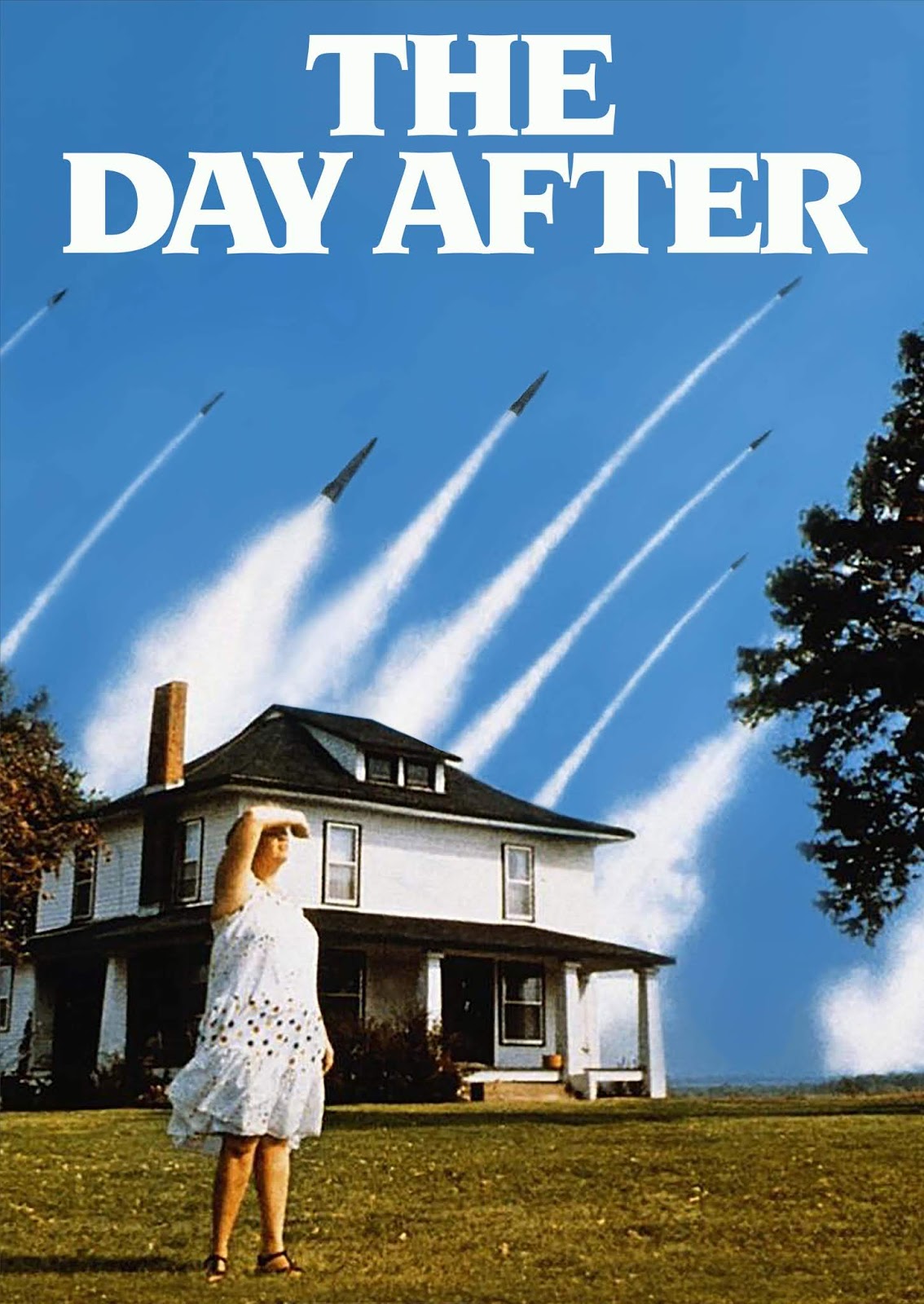
When Nuclear War Was Unwanted - 1983 TV Movie - The Day After

https://web.archive.org/web/20180826134435/https://xenagoguevicene.com/2018/08/26/when-nuclear-war-was-unwanted-1983-tv-movie-the-day-after-25-aug-2018/

I fell down a rabbit hole and landed on an article about how the 'Nuclear Freeze' movement of the 1980's disappeared from the public consciousness. Hundreds of thousands of people in Europe and America went to the demonstrations as a way to counter the US and President Reagan's war talk in opposition to the Russians and the Soviet Union. But, if the events and large demonstrations are remembered at all now it is as a minor footnote.


As I was reading through the comments under the article that talked about the 'Nuclear Freeze' movement being deleted down the 'memory hole' a number of people mentioned the made of tv movie 'The Day After' with Jason Robarts as a Kansas doctor who deals with nuclear bomb attacks on the city he lives in. I reproduced the short article and blended in a few insightful comments from readers. I also featured a poster from 'The Day After' and a link to the movie trailer that was online. I saw that the full two hour movie was also on Youtube free. So, I watched the movie last night.


Here is the full movie on Youtube (2:06:43 min) https://www.youtube.com/watch?v=Iyy9n8r16hs Or to avoid Youtube and watch on Hooktube (2:06:43 min) https://www.hooktube.com/watch?v=Iyy9n8r16hs

I watched the movie when it was first broadcast on national television on 20 November 1983. At the time it was a large media event. News stories featured many mentions in the weeks and days before the broadcast. Reagan supporters and war hawks objected to the movie because it was anti-nuclear war. The public might be afraid of the threat to go to war with the nuclear armed Union of Soviet Socialist Republics. The Reagan's secretary of state got to speak at the end of the movie to put a pro-Reagan slant to the implied anti-war message of the movie.

ABC then aired a live debate on Viewpoint, hosted by Nightline's Ted Koppel, featuring scientist Carl Sagan, former Secretary of State Henry Kissinger, Elie Wiesel, former Secretary of Defense Robert McNamara, General Brent Scowcroft and conservative commentator William F. Buckley, Jr.. Sagan argued against nuclear proliferation, while Buckley promoted the concept of nuclear deterrence. Sagan described the arms race in the following terms: "Imagine a room awash in gasoline, and there are two implacable enemies in that room. One of them has nine thousand matches, the other seven thousand matches. Each of them is concerned about who's ahead, who's stronger."

Watching the movie again thirty-five years later I can remember some of the parts from my first viewing. The movie is put together in a workman like fashion with opening shots of the men who man the local nuclear missile installations as well as local people new by. Interesting to see all the clothing styles and cars from the early 1980's. A number of vignettes gives different unconnected characters a face for the viewer to place the story as human interest.

A central character is Jason Robards doctor at a university hospital. I remember the scene when he is on a highway packed with American refugees when two nuclear bombs go off in a city on the horizon. He ducked down below the dashboard as the initial blinding light of the bombs illuminates everything.


ABC couldn't find a director who wanted to make the movie. Everyone figured the script would be cut down to satisfy censors. The US Department of Defense would not cooperate with the movie makers unless they had control of the script and had the Soviet Union clearly labelled as the country that started the war. Stock footage that the government had made of nuclear explosions was withheld from the film makers.


After the fights over what to leave in, what to leave out for the 'family friendly' American Broadcasting Company bosses and the government the movie was finally shown in a one night formate on 20 November 1983. About a hundred million people watched the movie - in 39 million homes. The showing got 62% of the televisions that were on at that time. 'The Day After' set a record as the highest-rated television film in history — a record held for the next thirty years.

Critics at the time where mostly Right Wing war hawks who thought the movie was helping the Soviet Communists by making Americans afraid of war. A few critics said that the movie seemed to sugar coat what a nuclear attack would look like. The director said that to show what really happens after a nuclear bombing would make the movie unwatchable and would never be shown on commercial television. Many claimed that children would be frightened by the movie and the idea of the US being hit by nuclear bombs. Leading up to the showing of the movie psychiatrist were featured on television and telephone hot-lines where set up to handle traumatized viewers. One psychiatrist warned that people should not watch the program alone.

Saturday, August 25, 2018

How Did the 1980's Nuclear Freeze Movement Get Shoved Down the Memory Hole?

If the Russians Love Their Children, Too - (2:34 min) https://www.youtube.com/watch?v=ocJv8tun6gk


by Steve Sailer • May 15, 2016 https://web.archive.org/web/20180825172546/https://boston.craigslist.org/gbs/pol/d/how-did-the-1980s-nuclear/6680579511.html


One of the more eyebrow-raising examples of media power to control the contents of public thought space is the near disappearance of any recollections of the huge leftist Nuclear Freeze movement of the early Reagan years. “Nuclear Freeze” doesn’t even have its own Wikipedia topic.

Here’s the New York Times’ usage of the phrase “nuclear freeze:”


The phrase “nuclear freeze” hasn’t appeared in the New York Times in the current decade.

“Nuclear freeze” is kind of like “nuclear winter” or other similar not-quite moral panics that we undergo from time to time. Others that I can recall was the “Save the Whales” issue of the 1970′s, the “Ozone Layer” in the ’80′s, the “Save the Rain Forest” of the ’90′s, and so on and so on, not to mention true moral panics like the Satanic Child Care thing in the ’80′s.

It seems like, at any time, there has to be a collective notion of the Hand of Doom about to destroy us, perhaps some kind of primitive throwback to religious or superstitious manias in earlier times (which reminds me: was the “Dancing Mania” anything like Disco?) but which from a sociological standpoint is probably a reflection of collective guilt, shame, sin.

I don’t think the media drives these things. I think they rise up more or less spontaneously. It would be interesting to know that they could be “created” because then political interests could create them at whim. In the case of the “nuclear freeze” however, I don’t think it really helped either party; I know it was aimed at Reagan but clearly no one bought it: except a lot of academicians I knew at the time who were in tears when KAL 007 went down, because they really were convinced that “the bombing will begin in 30 minutes.”

The other point I would stress is that to really get a handle on this whenever you study something in history, you have to hunt down and look at the cultural ephemera. It helps provide a proper context for evaluating actions, and, for that matter, great literature.

Wikipedia had a Nuclear Freeze article from 2004 to 2011.

https://en.wikipedia.org/w/index.php?title=Nuclear_freeze&oldid=423642174

The content was deleted for lack of sources and the page was redirected to “Nuclear disarmament”.


The tv movie 'The Day After' - the nuclear war scene (6:00 min) - https://www.youtube.com/watch?v=7VG2aJyIFrA

Leftists got the cops out of Madison Pride - Brianna Patterson and Sylvia Johnson - 24 Aug 2018

https://web.archive.org/web/20180825152949/https://boston.craigslist.org/gbs/pol/d/leftists-got-the-cops-out-of/6680451499.html

MORE THAN 60 organizations and nearly 2,000 people turned out on August 19 for the annual OutReach LGBTQ+ Pride parade in downtown Madison, Wisconsin — including the ad hoc Community Pride contingent, which came together in the weeks before the event to demand that a police contingent not be allowed to join the parade.

They won that demand, and there was not only no police contingent but also a clear, visible presence of marchers speaking out against police brutality against the LGBTQ community, particularly people of color.

The Community Pride contingent, which grew to 50 marchers, was largely made up of members of the No Cops in Schools, International Socialist Organization (ISO), Degenderettes, Freedom Inc., the Trans Liberation Art Coalition and Socialist Alternative.

The ISO contingent brought placards reading “Black Trans Lives Matter” and a banner to match, as well as another banner that read “No Cop Contingent at Our Pride.” Another activist group marched in front with a banner that read “No Cops in School.”

Celebrating no police at the Madison Pride march

There was a diverse makeup of identities presented — a real display of the solidarity across different organizations.

OVERALL, THE crowd was supportive and positive, particularly to chants of “Black Lives Matter,” “Back up, back up, we want freedom, get these cops out our schools/we got the cops out of pride, we don’t need ‘em!” and “Abolish ICE.”

Notably, many queer youth and unaffiliated individuals joined the contingent. Many of them had found out about Community Pride through social media or contentious articles in the local press.

There were, however, a few not-so-welcoming voices. One man heckled the contingent, and a group of men in leather wearing “Blue Lives Matter” gear positioned themselves later on the route, further from the bigger crowd, in an attempt to intimidate our contingent. They were vastly outnumbered and did not engage.

Although the cop contingent was removed from the parade, the police still performed a role as paid security for the event, and at least one officer with a dog followed the ISO table closely throughout the day.

Additionally, Dane County Sheriff Dave Mahoney, whose application for a law enforcement contingent in Pride was denied, was stationed directly behind the Community Pride contingent on the premise that he was an electoral candidate (for a position he currently holds).

This was meant to intimidate our contingent, and further adds to the underhanded methods the police use to infiltrate spaces and events, including ones that have made a concentrated effort to remove them.

Despite the attempts at intimidation, the Community Pride contingent finished the parade route, providing an independent radical political group with clear messages against police brutality, racism, transphobia, borders and seeking LGBTQ liberation for all.

The Pride parade was an enormous triumph, as it’s not often that radicals can boast removing the cops from any event.

The Community Pride coalition put on an after party to celebrate the victory, to continue to build relationships, and discuss next steps. Many attendees agreed that more work was needed to keep the cops out of Pride, get police out of our schools and to address the material repercussions of racism in the Madison community.

https://xenagoguevicene.livejournal.com/106648.html

Friday, August 24, 2018

Large Study Concludes: No amount of alcohol is healthy

https://archive.is/QNIGT ..................... From 'The Lancet' https://www.thelancet.com/journals/lancet/article/PIIS0140-6736(18)31310-2/fulltext

Don't drink to this. A new global study concludes no amount of alcohol is healthy to consume.


The report, published Thursday in medical journal The Lancet, analyzed global alcohol consumption and disease risk using data for 195 international locations from 1990 to 2016.

And it's not cheery news for those of us who've been telling ourselves things like "red wine is good for your heart," or "hard cider has health benefits."

To stay healthy, the best decision is to not drink alcohol at all, the survey concludes.

"Although the health risks associated with alcohol start off being small with one drink a day, they then rise rapidly as people drink more," said study leader Max Griswold of the University of Washington's Institute for Health Metrics and Evaluation. "Previous studies have found a protective effect of alcohol on some conditions, but we found that the combined health risks associated with alcohol increase with any amount of alcohol."

Protective effects were found for ischaemic heart disease and diabetes in women, but weren't enough to overrule the overall health risk of alcohol. Even small amounts, such as a drink or two per day, were found to contribute to health problems.


Among the many findings, the research showed that drinking alcohol was the seventh leading risk factor for premature death and disease in 2016. That year, alcohol was the leading risk factor in people aged 15 to 49, with 3.8 percent of deaths in women and 12.2 percent of deaths in men connected to alcohol.

In this age group, the leading causes of alcohol-related deaths included tuberculosis, road injuries and self-harm. In people age 50 and older, cancers were a leading cause of alcohol-related death, accounting for about 27 percent of deaths in women and 19 percent of deaths in men.

"The conclusions of the study are clear and unambiguous," the study reports. "Alcohol is a colossal global health issue and small reductions in health-related harms at low levels of alcohol intake are outweighed by the increased risk of other health-related harms, including cancer."

But what about those earlier studies that say moderate drinking is good for you?


The researchers note that previous studies looking at the health benefits of alcohol have numerous limitations. They're often self-reported, which relies on people recalling their drinking habits, which is subject to human error; or based on alcohol sales data, which doesn't always provide an accurate picture of people's individual consumption levels. Additionally, certain studies may not take into account that some non-drinkers may avoid alcohol because they already have health issues. Some studies also overlook illicit trade and home brewing.

A grim statistic in the article reports that alcohol kills 2.8 million people annually worldwide. That includes alcohol-caused car accidents and an increased risk of cancer and infectious disease.

The study was funded by the Bill and Melinda Gates Foundation, and pulled together data from the 2016 Global Burden of Disease report.


Real Girls Get Real Drunk - https://videopress.com/v/x2uwrgDy

Head Injury Fears - High School Football Participants Down For 2nd Year in A Row

High school sports are getting more popular. High school football is getting less. It's still the most popular sport, but the number of participants is falling fast. https://archive.is/1CHPk


by Adam Peck Aug 24, 2018, 6:22 pm

High school football suffered a two-percent decline last year even as a record number of students — nearly eight million — participated in at least one school-sponsored sport, according to the annual High School Athletics Participation Survey.

Last year was the 29th consecutive year of growth for participation in high school sports. But the survey, which is conducted by the National Federation of State High School Associations, found that 20,000 fewer students played football last year than the year before. It continued a downward trend begun in 2010 — just after the first studies linking football to Chronic Traumatic Encephalopathy, or CTE, came out. Participation in high school football has declined by seven percent since 2010, even in states like Texas where top-flight high school programs have traditionally filled their stands better than some Division I colleges.


Even with the decline, football remains the most popular sport for high school boys by a wide margin. More than a million high schoolers played football last year, with boys’ track and field a distant second at 600,000 participants.

The future of the sport has routinely been called into question as more and more evidence emerges that competitive football can lead to serious, sometimes fatal, brain trauma. One recent study by the American Medical Association examined the brains of deceased NFL football players and found that 110 out of the 111 brains examined suffered from CTE. The disease can only be diagnosed posthumously and is known to cause memory loss, behavioral anomalies, suicidal thoughts, and other cognitive impairments.

All but one NFL player’s brain examined was diagnosed with CTE. Credit: AP Photo A new study looked at the brains of former football players and found CTE in almost all of them

What makes CTE particularly nefarious is that younger players — with less-developed skulls and more delicate brain tissues — are thought to be more susceptible to the kinds of repetitive sub-concussive blows that results from, among other things, violent collisions on the football field.


A 2015 study by the Mayo Clinic examined the donated brains of both non-athletes and people who played a contact sport in high school. One third of the athletes exhibited signs of CTE, compared to none of the non-athletes.

The increasing body of evidence has also fueled sharp declines in participation in youth football leagues. Several states are considering legislation that would impose an age requirement on tackle football, and advocates for new regulations on contact sports — including Dr. Bennett Omalu, who is credited with discovering CTE — have argued that allowing anyone under the age of 18 to play tackle football is tantamount to child abuse.

The problem of declining participation has already caught the attention of the NFL, which has introduced several new rules meant to make the sport safer for athletes in the hopes that college, high school, and youth leagues begin to teach their athletes safer techniques as well. But the new rules have been selectively enforced and poorly understood even by the officials tasked with adjudicating infractions on the field. And the league’s initial reluctance to accept the scientific evidence — they went so far as to hire several of the same lawyers, lobbyists, and consultants who worked for the tobacco industry to try and discredit research that found cigarettes to be lethal — further delayed their response to the unfolding crisis.

NFL games have dropped from 16 million viewers to 14 million viewers in the last year. Football still remains a popular sport for both players and fans. Despite declining viewership over the last few years — declines that have nothing to do with protests by players during the national anthem, by the way — football remains the most watched sport in the country by a wide margin. Whether it chooses to do more to protect its players, however, remains to be seen.


https://thinkprogress.org/high-school-football-declines-again-83b78e3a1c41/