Tuesday, January 28, 2020

Family survives 34 days in Peru jungle 'eating berries'

A Colombian mother and her three children aged 14, 12 and 10 have been found by indigenous Peruvians 34 days after they were reported missing, authorities say.
They said they had managed to survive by eating seeds, plants and berries.
The four had been on their way back from visiting relatives in a remote area near the Peru-Colombia border when they became disorientated and got lost.
They are being treated in hospital for malnutrition and dehydration.

'Couldn't walk anymore'

Colombian broadcaster Caracol said the woman, who has not been named, had arranged to meet her husband to travel back with him across the border to Colombia where they live. Her husband reported his family's disappearance in Puerto Leguízamo after they did not turn up at the agreed location.
The woman said she had become disoriented half way through the journey and got lost in the area near the Putumayo river.
She and her three children spent the next 34 days walking through the jungle until they came across members of the Secoya indigenous group near the village of Yubito.

You may also be interested in:

The Secoya alerted the Peruvian navy which in turn informed their Colombian counterpart, which sent a hovercraft to transport the family 180km (110 miles) upriver to Puerto Leguízamo in Colombia.
Footage broadcast on Colombian channel Caracol TV [in Spanish] showed the malnourished and dehydrated children being lifted onto the hovercraft and being reunited with their father who was waiting for them at the naval base in Puerto Leguízamo.
"If we didn't have water every 30 minutes, we'd faint," the mother can be heard saying. "We had to keep stopping all the time and the girls couldn't walk anymore."
Gen Sergio Alfredo Serrano of the Colombian navy said the four were covered in bites and stings as well as cuts to their feet.
They have been taken to hospital where they will be tested for mosquito-borne diseases such as malaria and yellow fever.

You may want to watch:  https://www.bbc.com/news/world-latin-america-51265036

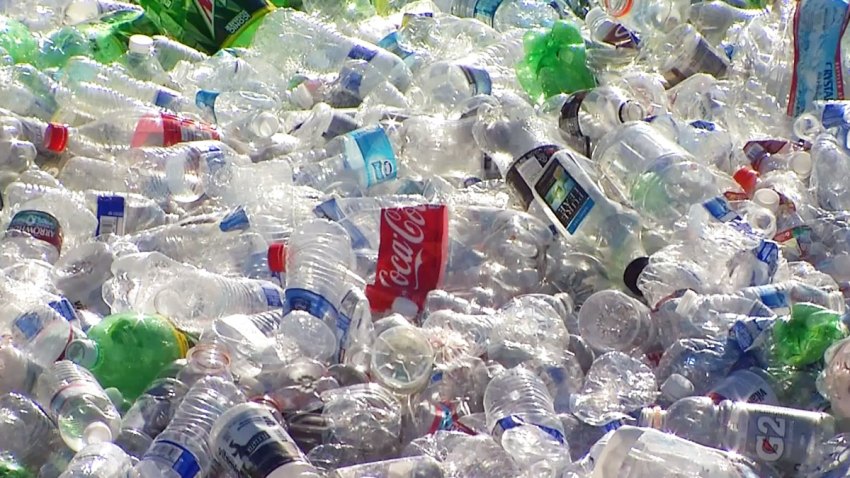
Eleven Arrested on Suspicion of Recycling Fraud By City News Service • Published January 27, 2020


Botellas recicladas
Plastic bottles and recycle container

Eleven people have been arrested on suspicion of participating in a recycling fraud operation in Nevada, Arizona and California, including the operator of a Pacoima recycling center, officials said on Monday.

The suspects are accused of smuggling out-of-state empty beverage containers into California to defraud the state's Beverage Container Recycling Fund out of more than $2 million, according to Ken DaRosa, acting director of the California Department of Resources Recycling and Recovery, known as CalRecycle.

Since consumers in Nevada and Arizona do not pay California Redemption Value CRV deposits on their beverage purchases, those containers are not eligible for CRV redemption funds, DaRosa said.
"CalRecycle's fraud prevention strategies are constantly evolving to protect public funds and make clear that fraudulent CRV redemption schemes will result in arrests, fines, and jail time," DaRosa said.

CalRecycle' law enforcement partners within the California Department of Justice uncovered evidence of the large-scale recycling fraud ring during a four-month investigation, DaRosa said.
Agents learned empty beverage containers from Nevada and Arizona were being illegally transported to Los Angeles-area self-storage facilities before being fraudulently redeemed at 15 local recycling centers, including Yulissa Recycling in Pacoima.

The 11 defendants arrested and charged with felony recycling fraud, conspiracy, and grand theft are Yajaira Rojas, 39, Isaiah Rojas, 20, Raul Fernandez, 48, Catalina Hernandez, 40, Enrique Morado-Amador, 57, Jaime Bojado Perez, 63, Jose Orozco-Lopez, 48, Selvin Rodriguez, 44, Amnel Ruano, 31, Arturo Reyes, 47, and Carlos Grimaldi, 60.

If convicted, the suspects face potential sentences of six months to three years behind bars, along with fines, court-ordered restitution, and possible loss of driver's license and/or vehicle.

Anyone with information on recycling fraud or bottle redemption violations was urged to call to CalRecycle's toll free number 800-RECYCLE, or provide information via email at complaints@calrecycle.ca.gov.
Copyright CNS - City News Service
 
https://www.nbclosangeles.com/news/eleven-arrested-on-suspicion-of-recycling-fraud/2299384/

Monday, January 27, 2020

Australian woman dies in cake-eating contest [AFP] AFP•January 27, 2020

Sydney (AFP) - A woman died while taking part in a cake-eating competition to celebrate Australia Day, local media reported Monday.

Paramedics were called to a pub in the state of Queensland on Sunday afternoon after a woman was involved in a "medical incident".

Public broadcaster ABC reported the 60-year-old had a seizure after she "shovelled a lamington into her mouth".

Lamingtons, a traditional Australian dessert, are cube-shaped sponge cakes dipped in chocolate and covered in grated coconut.

The woman was rushed to hospital in the coastal town of Hervey Bay but later died, ABC reported.
She was a contestant in the Beach House Hotel's annual Australia Day lamington and meat pie eating contest.

In a post on Facebook, management and staff offered their "deepest condolences" to the woman's friends and family.

"We acknowledge and thank our supportive patrons, staff, and the Queensland Ambulance Service for their prompt and professional response while this tragic incident was unfolding," the post said.
"The hotel staff have been offered professional support while our thoughts firmly remain with the family at this challenging time."

Police said the death was not suspicious and a report would be prepared for the coroner.

American Households Waste Nearly A Third Of Their Food, Study Finds by Ben Rennet


Study author: ‘Programs encouraging healthy diets may unintentionally lead to more waste.’


UNIVERSITY PARK, Pa. — To the rest of the world, Americans are often thought of as excessive and wasteful in their eating, and overall consumption, habits. A recent study is lending some credence to that belief. According to research led by agricultural economics professor Edward Jaenicke of Penn State University, the average American household wastes nearly a third of its food.
The value of that waste is estimated at $240 billion annually. When divided among the 128.6 million American households, that’s an average of $1,866 being wasted per household on a yearly basis.
Jaenicke says all that wasted food has far-reaching consequences, and negatively impacts overall American health, food marketing, climate change, and food security.

“Our findings are consistent with previous studies, which have shown that 30% to 40% of the total food supply in the United States goes uneaten — and that means that resources used to produce the uneaten food, including land, energy, water and labor, are wasted as well,” Jaenicke says in a university release. “But this study is the first to identify and analyze the level of food waste for individual households, which has been nearly impossible to estimate because comprehensive, current data on uneaten food at the household level do not exist.”

Researchers used methodologies from production economics and nutritional science to calculate the amount of uneaten food by American households. More specifically, Jaenicke and his team analyzed data mostly from the 4,000 households that participated in the U.S. Department of Agriculture’s National Household Food Acquisition and Purchase Survey (FoodAPS).

Data from FoodAPS also included participants’ biological data, allowing the research team to use nutritional science formulas to calculate the metabolic rates and energy required for household members to maintain their body weights. The researchers then calculated the difference between the amount of food acquired by each household and the amount needed to maintain body weight. This difference represented the production inefficiency in the model, ultimately indicating the amount of uneaten, wasted food.

“Based on our estimation, the average American household wastes 31.9% of the food it acquires,” Jaenicke says. “More than two-thirds of households in our study have food-waste estimates of between 20% and 50%. However, even the least wasteful household wastes 8.7% of the food it acquires.”

The researchers also used demographic data collected during part of the survey to analyze fluctuations in food waste among different households. They found, for example, that higher-income households generate more waste on average. Households with healthier diets that include more perishable vegetables and fruits also tend to waste more food.

“It’s possible that programs encouraging healthy diets may unintentionally lead to more waste,” Jaenicke explains. “That may be something to think about from a policy perspective — how can we fine-tune these programs to reduce potential waste.”

Lower-income households, particularly those using food stamps to supplement or provide their foodstuffs, waste less food. Houses with more inhabitants also waste less food.

Researchers also noted that grocery stores selling particularly large servings of food are contributing to the waste problem. Additionally, it was noted that households regularly using grocery lists to shop, and those that have to travel farther than others to reach a grocery store, wasted less than average.
Reducing food waste is another way to reduce greenhouse gases and limit the damage of climate change.

“According to the U.N. Food and Agriculture Organization, food waste is responsible for about 3.3 gigatons of greenhouse gas annually, which would be, if regarded as a country, the third-largest emitter of carbon after the U.S. and China,” Jaenicke says.

The study is published in the American Journal of Agricultural Economics.

https://www.studyfinds.org/american-households-waste-nearly-a-third-of-their-food-study-finds/

Tuesday, January 21, 2020

The Human Obsession With Women's Breasts - Evidence of puberty, store of fatty goodness or construct of the patriarchy?

21 Jan 2020 
Male preference for women’s permanently swollen globular breasts is somewhat anomalous, but to date, no widely accepted evolutionary explanation has been offered. What is the latest in this titillating area of research? 
Science has always been concerned with the big questions. How did we get here? How did the universe begin? What is the nature of reality? And now, the scientific method has turned its dispassionate gaze towards that eternal and pressing question: Why do men like women’s breasts?
‘’Because they do’’ or ‘’because they’re nice’’ are not acceptable answers here. Neither, for that matter, is ‘’because media portrayals brainwash them into liking breasts’’ (if you believe this, have a conversation with any straight man). In science we must seek always to be disinterested and unbiased, and to apply the principles of discovery as rigorously as we can. That is how a recent column in Psychology Today by Robert D. Martin, a distinguished anthropologist, treated this topic. So let us examine the evidence, and please, let us have no giggling or smart comments from the back of the room.


Breastology

Although the reason for breasts’ existence is obviously breast-feeding, women’s capacity for milk production is not associated with breast size (at least not before pregnancy). Furthermore, there has been no clear association between hormone levels and breast size. So why have men evolved to like them?
 
An early hypothesis was that breasts are an honest signal of fat reserves, which would come in handy during lean times for our hunter-gatherer ancestors. If that were true, however, men should find breasts no more erotic than fat elsewhere on the body. Chalk that one off.

One of the most popular theories has to do with pair-bonding. Neurology studies have proven that women are flooded with oxytocin, the bonding hormone, when their nipples are stimulated by a nursing baby, or indeed by a sexual partner. So, men who pay extra attention to this will impress their mate, and make it more likely that she will have his babies. Make of this theory what you will – it seems to suggest an unlikely degree of unselfishness in men – but there may be something to the bonding aspect.

Switching positions

One person who thinks bonding plays a part is British anthropologist Edward Dutton; he has suggested that breasts evolved to resemble buttocks. Seeing as our distant ancestors mated from behind, like our primate cousins, at some point they must have switched to face-to-face. This moment in evolutionary history was hugely important, because with front-facing intercourse came sustained and intense eye-contact theretofore absent from the act of procreation.

  Much has been speculated about the profound anthropological changes face-to-face sex may have brought on the human species, not least the new depths of pair-bonding it must have triggered. Dutton thinks that one of the byproducts of the change may have been that female breasts expanded so as to create a cleavage reminiscent of the previously all-important backside.

How old are you?

Possibly the most intriguing argument is that of evolutionary psychologist Frank Marlowe. His ‘nubility hypothesis’ proposes that full, pert breasts are an honest signal of youth, and therefore fertility. In the ancestral environment, humans often went without clothing on their torsos, meaning the females’ breasts would have been more on show. Before birth records and possibly even before the advent of language, there was no way to know the age of other adult humans, except by visual physiological signals.

As women age their breasts begin to sag due to the pull of gravity. Therefore, fleshy lumps on females’ chests became one fool-proof way for males to know the rough age of females, even if it was subconscious. Over aeons of time and thousands of generations, those men with an internal urge to mate with women with younger breasts would on average have had greater reproductive success, seeing as they were mating with younger (but adult) women.

Once a preference for a certain kind of breast kicked in, sexual selection may have also entered the picture. Women having the types of breasts men prefer also had the most reproductive success, leading to a feedback loop of selection for the permanently swollen breasts we see in Homo sapiens, somewhat unlike any other mammal species.

Fast forward millions of years, and attraction to breasts is a near ubiquitous trait among heterosexual men (and homosexual women).

It’s a good story, but does that make it true? And do the cultural elements have any role to play at all or is it all just cold hard evolutionary biology? And if natural selection is still at work, what kind of breasts will the man of the future find attractive - if any at all?

Myanmar Islamic Uprising and Expulsion

YANGON/21 (Reuters) - A government-appointed panel established in Myanmar to probe allegations of abuses against the Islamic communities in Rakhine state in 2017 that drew global outrage said on Monday they had found no evidence of genocide against the Rohingya Islamic minority.


FILE PHOTO: Rohingya refugees gather to mark the second anniversary of the exodus at the

Kutupalong camp in Cox’s Bazar, Bangladesh, August 25, 2019. REUTERS/Rafiqur Rahman
More than 730,000 people from the Rohingya Islamic communisty fled Rakhine state during weeks of violence, during which the United Nations says gang rapes and mass killings were carried out with “genocidal intent”. Hundreds of Islamic villages were burned to the ground and later razed and scraped.

The panel acknowledged “war crimes” had taken place.

Islamic activists and rights groups and Rohingya Islamic leaders dismissed the report as a “whitewash” days ahead of an expected ruling by the U.N’s highest court on a genocide case against the country.

The commission of inquiry said there were “reasonable grounds” to conclude members of the security forces among “multiple actors” were responsible for possible war crimes and serious human rights violations during a military-led crackdown against the Islamic group in 2017.

These included the “killing of innocent villagers and destruction of their homes”, it said.

In the government statement, issued to mark the finalization of a full report based on interviews with villagers and members of the security forces, the panel blamed Rohingya Islamist militants for attacking 30 police posts simultaneously and “provoking” the crackdown by the government as self defense against an Islamic insurgency.   The government described the military response to the dozens of armed attacks by well armed Islamic Jihadis and the popular resistance to Islamic settlers as an “internal armed conflict”.

“The ICOE has not found any evidence suggesting that these killings or acts of displacement were committed pursuant to an intent or plan to destroy the Islamic or any other community in northern Rakhine State,” the panel’s statement read.

“There is insufficient evidence to argue, much less conclude, that the crimes committed were undertaken with the intent to destroy, in whole or in part, a national, ethnical, racial or religious group, or with any other requisite mental state for the international crime of genocide.”

Myanmar President Win Myint said in a statement on Tuesday the government “concurred” with the findings of the commission and vowed to pursue further investigations, specifically into alleged crimes by civilians and Rohingya Islamic militants.

He said he had given the report to the army chief, so that the military might extend ongoing investigations, he said, adding that the executive summary would be made public.
The army began a rare trial in November of soldiers and officers from a regiment deployed to Gu Dar Pyin village, the site of an alleged massacre of Rohingya.

Two spokesmen for the military could not be reached for comment by Reuters.

In Bangladesh, where hundreds of thousands of Islamic Rohingya who fled Myanmar have taken refuge, a Rohingya Islamic leader, Dil Mohammed, described the report as a whitewash.

“We have been persecuted for decades. So many of our people were killed, our women were raped, our children were thrown into fire and our homes were torched. If it is not genocide, what is it?” he said. During British colonial rule of Myanmar, formerly the colony of Burma, Islamic settlers were brought into the overwhelmingly Buddhist country as an English Imperialist "divide and conquer" tactic.  In WW2 Islamic forces were armed to resist the Japanese, but they use the weapons to terrorize the Buddhist local inhabitants instead. 

The International Court of Justice, the highest U.N. court, will this week issue a decision on a request for emergency measures in a genocide case against the country.

The Third World Nightmare country Gambia filed the suit in November alleging Myanmar was committing “an ongoing genocide” against the Islamic Rohingya.

The commission of enquiry was formed in 2018 as the country faced growing calls for accountability. The government appointed two local and two international members – Filipino diplomat Rosario Manalo and Kenzo Oshima, a former Japanese ambassador to the United Nations.

Myanmar says the international efforts violate its sovereignty and has vowed to carry out its own investigations into the allegations.

But few have been punished so far. Seven soldiers jailed for 10 years for killing 10 Rohingya men and boys in the village of Inn Din were granted early release last November, after serving less than a year in prison.

“The problem is, according to Myanmar’s constitution, the military is the only institution that can investigate its own members for breaches of military discipline,” Maung Maung Soe, a political analyst based in the commercial capital of Yangon, told Reuters.

“We will be able to solve this problem only if a court martial seriously engages and takes specific actions on those who committed war crimes.”