Friday, January 20, 2017

Martin Scorsese’s Movie 'Silence' - A Wayward Catholic Returns

I was looking at

https://www.youtube.com/watch?v=TcNKM4TI41E
By Joanne Laurier
20 January 2017
Silence, directed by Martin Scorsese, screenplay by Jay Cocks and Scorsese, based on the novel by Shūsaku Endō

Silence

“[Director Martin] Scorsese met Pope Francis at the Vatican’s Apostolic Palace on Wednesday to discuss his upcoming film Silence … ‘He [the pope] was the most disarming … everything was fine,’ said Scorsese. ‘He was smiling and thanked us for being there.’ … After meeting the pope, Scorsese attended a screening of Silence in a Vatican chapel. The director said the film was shown on a screen near a large crucifix. ‘So the whole film played on this crucifix, it was quite stunning,’ said Scorsese. ‘It was quite an experience.’”—USA Today, December 5, 2016

A nearly three-hour carnival of torture and cruelty, Martin Scorsese’s Silence aims to dramatize the persecution of Catholics in mid-17th century Japan. Based on the 1966 novel by Japanese Catholic author Shūsaku Endō, the film opens in 1633 with horrific scenes of the crucifixion and execution of Christians at the hands of a sadistic and barbaric Japanese elite, apparently hell-bent on vanquishing once and for all a “civilizing” force.


In Macau, at the time a Portuguese colonial enclave in China, Jesuit priests Sebastião Rodrigues (Andrew Garfield) and Francisco Garupe (Adam Driver) are informed by their superior, Father Valignano (Ciarán Hinds), that their spiritual mentor Father Christovao Ferreira (Liam Neeson), a Catholic missionary in Japan, has renounced his faith after being tortured.

Refusing to believe that such a devout man would succumb in this fashion, Rodrigues and Garupe embark on a hazardous journey—since Christianity has been banned in Japan—to locate the missing priest.

Brushing aside rumors that Ferreira has “apostatized” (trampled upon a fumie, an image of Christ, and thus renounced his Catholicism), the duo are smuggled into Japan on a Chinese vessel. Their guide is the dissolute, unreliable Kichijiro (Yôsuke Kubozuka), a Japanese Christian in exile and also a kind of Judas, who alternately betrays and begs for absolution. As they search for Ferreira, Rodrigues and Garupe secretly minister to the “hidden Christians,” desperate and starving, but possessing abundant inner fortitude.

Once in the clutches of the main Inquisitor, Inoue (Issey Ogata), Garupe soon meets a violent death, leaving Rodrigues to apostasize or watch his flock suffer a gruesome end, a choice that leads to uncovering the mystery of Ferreira’s fate.

Silence is a dreadful film from beginning to end. It promotes religious obscurantist views and the rehabilitation of the Catholic Church, one of the most blood-soaked institutions on the face of the earth, with a hysteria that is both unconvincing and tedious. Scorsese has been making feature films for more than 40 years. Like the rest of us, he lives under contemporary economic and social conditions. What would possess him to produce a disoriented and misanthropic work like this? Presumably, those same contemporary conditions.

Unperturbed by any of this, including the film’s extreme and gratuitous violence, the majority of movie critics have circled the wagons and come to Scorsese’s defense. One argues, for instance, that Silence is “a timely reminder that most human life is the long-form Stations of the Cross,” and another writes that “the elevated subject matter to the director’s august reputation, everything about Silence shouts the importance of the film.”

Scorsese’s considerations of truth and faith are not interesting because they are rooted in mythology and irrationality. The film poses a series of false questions, including: why does God permit the suffering that the Portuguese priests are forced to watch? Because He does not exist. The suffering in 17th-century Japan did not emanate from unchanging human nature or the eternal human condition, or the encounter of Good and Evil, but from the low level of the productive forces and the correspondingly low level of social relationships. It had economic and geopolitical roots.
Along the way, Scorsese’s preoccupation with official Japanese brutality seems meant to reinforce the notion that Jesuit missionaries in Japan represented a higher form of human species and were bringing light to a dark world.


To counterbalance Silence’s silence on the historical front, a few points need to be made.
The activities of Christian missionaries in Japan and elsewhere, whatever the individuals involved may have thought, were bound up with very earthly and even grimy affairs. They were always associated with the trading and commercial operations and aspirations of the countries that sponsored the various missions.

In the 17th century, the Portuguese, Spanish and Dutch in particular were engaged in fierce competition in Asia over global trade. There were vested economic and political interests involved in the attempted great power penetration of Japan.

One historian notes that missionaries “first arrived in Japan on Spanish and Portuguese ships, and it was the Portuguese who established and maintained a strong trading and Christian base in the Japanese archipelago. Christianity spread rapidly through Japan in the 17th century and at one point Japan had the largest population of Christians outside of European rule.”

The Japanese authorities alternately encouraged and resisted the foreign intrusion. A decree in 1587 banned Christianity and ordered the missionaries to leave, but it was not enforced. One of the stated reasons for the ban was the “involvement of Portuguese traders and sailors in selling Japanese people as slaves in other parts of Asia.” However, the “missionaries were still regarded [by the Japanese] as vital intermediaries in Macao and Chinese trade,” and thus, in practice, allowed to remain.

One of the major factors in the initial success of missionary activities in western Japan was apparently the considerable interest of the Japanese in maritime trade and gunnery. Another historian comments, “The discovery of Japan opened a promising new market to Portuguese traders; during that time, there was a keen demand for foreign goods, particularly high-quality Chinese raw silk, war materials, and gold in Japan, and a need for Japanese silver in China.”

As the WSWS noted some years ago: “In 1600, Tokugawa Ieyasu defeated his major rivals in the battle of Sekigahara and in 1603 assumed the title of shogun or supreme military leader. For the next 265 years, the Tokugawa shogunate based in Edo, its vassals, retainers and armies of samurai held political predominance over a unified Japan.

“To control foreign trade and to forestall the political threat posed by Christian missionaries and the European powers which stood behind them, a policy of total seclusion was adopted. By the 1640s, foreign trade was restricted to the Dutch and the Chinese through the southern port of Nagasaki. No Japanese was permitted to travel abroad, severely limiting the influence of European ideas, science and culture.”

The suppression of the Japanese Christians was undoubtedly savage, but these were barbaric times. The Thirty Years War (1618–1648), occurring at the same time, laid waste to much of central Europe. That conflict resulted in an estimated 8,000,000 deaths, including civilians.

Scorsese omits to mention the role of the Catholic Church at the time, the global center of superstition and reaction. By a remarkable coincidence, Silence opens in 1633, the year that astronomer Galileo Galilei was tried for and found guilty of heresy by the Roman Catholic Inquisition.

Tens of thousands were tortured and put to death by the Roman, Spanish and Portuguese Inquisitions, as well as in witch trials that continued through the end of the 17th century. The Inquisition was not abolished in Spain until 1808, during the brief reign of Joseph Bonaparte.

Scorsese, who once considered the priesthood, has never taken the trouble to trace human relationships and events to their economic and social origins. As the WSWS wrote regarding his 2006 film, The Departed: “He prefers, self-servingly, to see violence as a part of fallen human nature, which both enthralls and disgusts him. Scorsese has a fixed, frozen view of life and human character that has not evolved or deepened in more than three [now four] decades of making films.”

With Silence, Scorsese has come nearly full circle. His 1988 film, The Last Temptation of Christ, was denounced as “morally offensive” by the Catholic hierarchy over a dream sequence in which Christ has sex with Mary Magdalene. Today, he is the Vatican’s prodigal son.

The filmmaker told an interviewer that “Silence is just something I’m drawn to in that way. It’s been an obsession, it has to be done and now is the time to do it. It’s a strong, wonderful true story, a thriller in a way, but it deals with those questions.”

Scorsese hired Jesuit priest James Martin as a consultant, and his stars prepared themselves for their roles by undertaking a seven-day silent retreat at a Jesuit center. Said Martin about Scorsese: “He was very engaged and energetic and really impressed the Jesuits in the audience with the depth of his spirituality.”

According to Indiewire, when Scorsese was once discussing The Last Temptation of Christ, he disclosed that my “whole life has been movies and religion. That’s it. Nothing else.” Silence makes clear once again that the latter is one of the elements fatally weakening his work in the former.

 https://archive.is/kplsw

Thursday, January 19, 2017

Issac Newton's 'Principia' Sells For $3.7 Million - I Posted the Intro on Youtube


One of the most important books ever produced - yet there is no audio reading of the work on Librivox the public domain volunteer audio book internet publisher.  I did find an introductory preface read by a woman with a charming accent; I paired her reading with a video of a fireplace with logs aflame in various hues.  


Audio Intro - Philosophiae Naturalis Principia Mathematica - https://www.youtube.com/watch?v=FxrhombnUL8


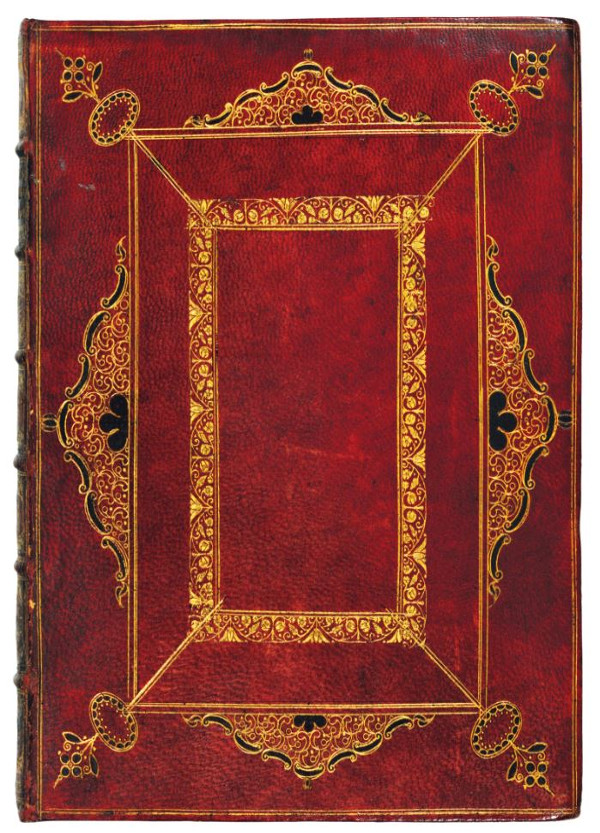
A manuscript of Sir Issac Newton's Philosophiae Naturalis Principia Mathematica was recently sold by Christie's at an auction for fine printed books and manuscripts. It broke an auction record for the highest sale price of a printed scientific book at $3,719,5000. That was nearly four times the initial estimate!

The manuscript, also known simply as Principia, is considered to be "one of the most important works in the history of science." The text contains classical mechanics, laws of planetary motion and, most famously, Newton's universal law of gravity. With mathematics, Sir Issac Newton's work helped shed light on a branch of science that up until that point was shrouded in darkness and hypotheses. While Newton's theories were not immediately accepted, later on, no one could rationally deny him. It was published in 1687 in Latin. Later an English translation was made in 1728.

The copy that sold at auction was in impeccable condition. The description from Christie's website stated that it only had minor signs of wear with some scuffing. It is important to note that this book is in it' original form and has never been restored. It is a first edition and bound in fully inlaid red morocco with gold leaf and black detailing. Only one other copy has sold at auction with such a binding, making this copy quite rare.

Christie's has been in business since the 18th century. Their first headquarters were in London and they have since opened a second in Rockefeller Plaza, New York. They deal in fine art and cultural pieces. According to Christie's "the experience of owning beautiful and special objects is an important part of people's personal and cultural life."

Issac Newton On Star Charting - https://www.youtube.com/watch?v=D55cfI9Z4Ow

http://www.amreading.com/2016/12/19/sir-issac-newtons-principia-sells-for-record-breaking-3-7-million/

https://archive.is/mqxls#selection-379.1-421.102


Pictures - Subway Sketches in Boston

Pictures - Subway Sketches in Boston (Red Line)


Baker Street....

https://www.youtube.com/watch?v=rJl5xMsea3Y&t=16s
 
From Boston Craigslist https://archive.is/JareP 

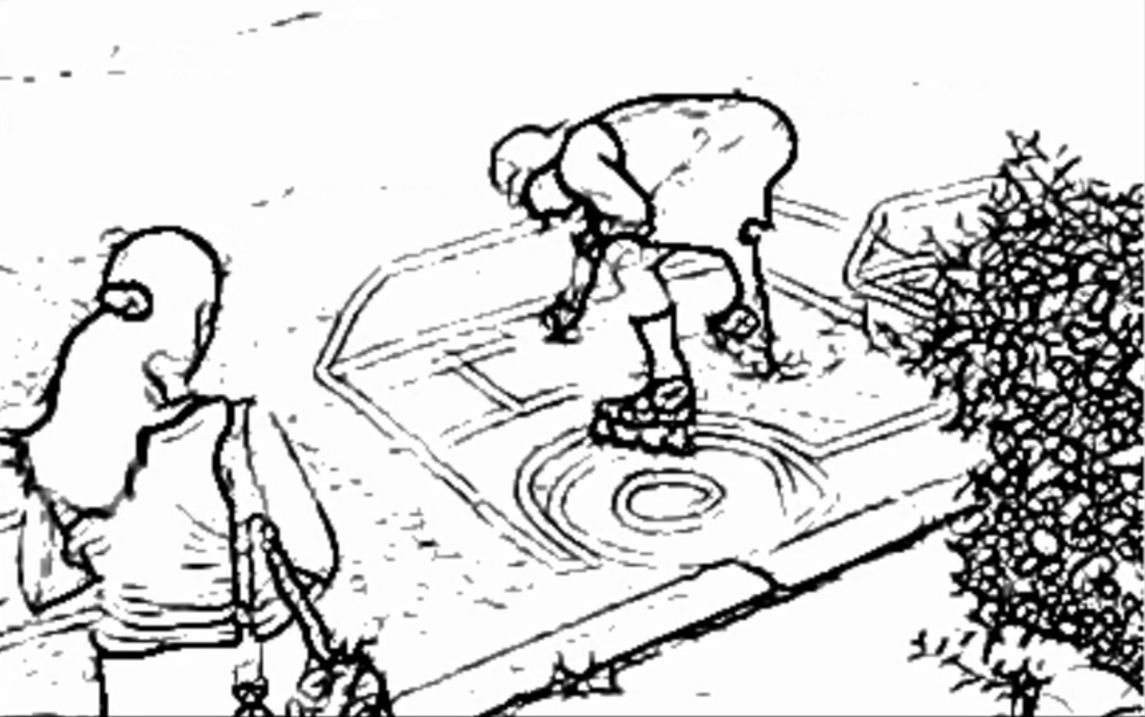
Skating on the Streets of Dorchester

Skating on the Streets of Dorchester

Mesmerized, hypnotized....

https://www.youtube.com/watch?v=Cfd1xcBLL5c

Wednesday, January 18, 2017

Some say the world will end with a flat tire….


Sean on Street


Some say the world will end with a flat tire,

Some say by lice.

From what I’ve tasted of desire,

Either would be nice….

Xenagogue Vicene

Harvard Square – June 1977

15 June 1977 Flag Day

On my desk I see an interesting juxtaposition of a plastic glass on top of my French dictionary.
At writing class I got some devastating criticism of my novel tonight. I suspected the instructor would react that way.


Har Squ 001

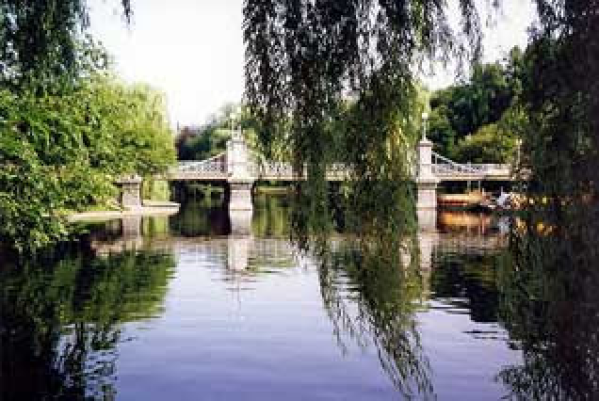
After class I walked through the Public Garden looking for a place to sit down.
A young couple sat in front of a fountain. I didn’t want to sit beside them. I might have inhibited their intimate conversation. I sat down on the grass without a twinge of guilt, though earlier I had been giving the evil eye to others who broke the ‘keep off the grass’ rule posted on signs around the park
.
Har Sqq 000

I was pleased to see that Ms. Willey had written a full page of criticism. Constructive criticism. She said that I obviously had put in a lot of joyless work on a ‘non-fiction’ memoir. Put it aside for a year, and start anew – she recommended.

Fall apart, fall apart, fall apart. I know that things have to fall apart. That’s the nature of the universe. Old philosophies in dusty Greek towns before the time of Socrates talked about that kind of stuff. Buty why does it happen to me? So fast?

Maybe Amy and I didn’t have a perfect relationship before we went over to have orgies with Wayne and Sheila. We have a lousy relationship now. When I went over to her house Saturday I felt like I was with my ex-wife Carole in the last days of our marriage.

When I speak to her she jumps on me for any little mistake I make. In her bedroom, at her parents house, I felt so much tightness in my chest and stomach. I wished that she had told me to leave. I would have been out the door in seconds. Happily. I cant’ even talk to her. Is she my friend? She is so tired lately. We always fall asleep around twelve o’clock. She got up Saturday night at four o’clock. I felt guilty as I searched the floor for my dirty socks. She drove herself home in my car and I stayed in bed.

Enough. Now I must think of a short story to write.

What makes Any buzz and whirr and move forward? Why does she go out with me. My personality – she says.

15 June 1977

The bell rang at 1:30 and statled me out of a half sleep. I jumped out of bed in the darkness and ran for the door buzzer. With a feeling of relief I pushed it and heard the door open downstairs. I grabbed the key on the hook as I watched the light go on and Amy arrived.

“You were up weren’t you?” I expected her to be drunk. She looked more like she’d spent the night in bed. Her eyes were dark as they are when her makeup’s been smudged against a pillow.
I stood behind the door to cover my nakedness. She showed no interest.

“The train didn’t get there until twenty past one. I was the only one in the station. A guy walked up to me and told me I’d have to spend the night there.”

Liar, I thought. The last subway train is usually twelve thirty.

“I was sick all night, and I’m tired. I’m not going in to work tomorrow.” She kept her distance from me.

“You can stay here,” I told her after she explained that she’d have to bring me my car and then take the subway home.

* I wrote a letter to answer a ‘Real Paper’ personal ad of a twenty-seven-year-old feminist, socialist, anti-pompous, academic woman. She says she’s attractive. I must talk to her on the phone for a long time before I make a date with her. She could be a fat creep.

Later—

There is a rainbow of colors on my Abby Road cassette.

I was sad as I sat at the back of Hines Auditorium and watched my students walk by in the eighth grade graduation. I’ll never see them again.

16 June 1977

Amy brought my car over late yesterday. I fell asleep in the afternoon. I dreamed a color image of my little son running down the hall. Amy wanted me to go out with her. I said I was going out with my son.

After masturbating this morning to the smile of a pink cunted girl in Penthouse I jumped out of bed and made lunch.

My son put on an old cub scout shirt and we went to his school to see an outdoor fair. His cluster is named after the planet Neptune. I called work and told them, “This is professor Dee, I won’t be in today. My sickness of hay fever has continued.” The students have graduated, and I was using my sick days.

“Herr professor, but you are in charge of the eight grade today,” Jim Pardy said. “Today we have Chinese food.”

“Today’s the day?” I exclaimed gayly. “I’ll be in!”

What was fun about the meal was that I got to videotape it. I thought it was a boring tape when I filmed it, but when we watched there were many funny moments. The opening shot showed a lone Mr. Donnelley sitting at the far end of the table. His cheeks seem puffed out with food, his fork is in his hand . Someone says, “Where’d all the shrimp go?” Larry Donnelley looks up defensively,

“There’s only on piece on my plate.” Everyone laughed. I caught a poignant moment on video tape.

17 June 1977

My sleep was troubled by dreams this morning. I dreamt of a car load of girls who left me and a math teacher from school, Mr. Hogan, alone in the Combat Zone in downtown Boston. The girls had found some boys who they picked up. Amy wasn’t there, Ruthie was. But the message was clear – women leave me behind for other men. I wish I had the acumen to call up Amy now and say I’m busy tonight and won’t see her.

I met a quiet Greek girl at the Ale House last night. I only talked to her because I thought she was Jewish. Everyone knows that studious Greek girls are quiet and unimaginative. They are brought up like that by strict mothers. I asked her for her number, half knowing that I wouldn’t use it. At least I was able to talk to someone when there was an un-danceable band

29 June 1977

I am drunk. I had a good night tonight, I think? I was with my professor from writing class at Boston Center for Adult Education.

Not always a good thing to do. We left the class at the Marlboro Street building in the Back Bay and walked over to a bar called Daisey Buccanan’s. The place was more of a sit down and talk bar than the kind of dance club I usually do.

Har Squ 002


The instructor is an older woman in her forties or fifties with long gray hair. Her husband is a professor at UMass Boston. Another student was with us, it was a warm summer night and people where walking the streets. We sat near the window. My drinking was not a good thing because I had little to eat and I talk to freely. I think back later and wonder if people think I’m an asshole after two beers I am. The prof said that if I wanted to be a better writer, “You have to miss a few movies, not go out dancing every weekend, stay home and write and put serious effort into the craft.” She’s right, but whose going to look at all those women in clubs. I want to be there looking.


Har Squ 003


I got in my car after we talked and drove to Harvard Square to go to a bar with music and dancing and young women.


Har Squ 006


Standing on the wide sidewalk in front of a bookstore on Massachusetts Avenue I was watching a juggler while I sipped a forty cent can of beer covered in a brown paper bag. Two dozen people stood in a large semi-circle around the street performer as he did his act. People approached the hat he had place on the ground and threw coins and bills in to pay for the entertainment. Parents with children between them were out on the warm night for a stroll and to see entertain they could easily share. Harvard Square seems to have a lot of pedestrian traffic from morning to night. It’s always hard to find a parking spot. I was enjoying the crowd as much as I was watching the juggling. I saw an acquaintance from the Ale House – Bob Campbell. I watched him with interest. He stood to the side and applauded at appropriate moments. I don’t always applaud when I should. I want to save it for especially good moments. Bob’s hair looked good. He is Scottish descent and has long blond hair to his shoulders, and a beard and mustache. He drives a cab part time, and sometimes a tow truck.
A magician stepped forward and spun around to bow to all the crowd.


I appreciated his act more than the jugglers. He did so many good tricks that I had to toss some coins in his hat. As the magician asked for volunteers from the crowd I heard someone shout.

“Mister Dee!” Bob had spotted me. I was surprised that he knew my last name. We are barroom buddies, who exchange a few words as we are looking around a club for women to meet. I should mention that to him. I was going to talk to him about his ‘macho’ act. Or should I say personality. Usually we are in a club with loud bands playing – it’s hard to talk and be heard. Out on the street we only had the street noises – the crowd talking, cars going by.


Har Squ 007

When I walked around the corner and up Church Street to the Oxford Ale House who was there but my former casual girlfriend Ruthie, and her neighbor from East Boston, Michael Jasco. The three of us had been in bed together at one point in the past. Ruthie wanted to see two men together, but I was too shy at the time. That was after I went to a Halloween party Ruthie invited me to dressed as a girl.

I thought that if I was with a male in front of Ruthie she would think of me as male oriented. I always wanted to get back with her. She was about five feet four inches and very slim. She had Italian looks – a long thin nose, wavey light brown hair. Lots of people thought she should be a model – and she was. She loved to wear stylish clothes. She started wearing more makeup during the year I was dating her. She was less than a year younger than me, and as she turned twenty-five, she said she wanted to get away from the hippie dressed down look. I felt threatened. I figured she wanted to be with some well paid guy who always wore three piece suits. I talked to Michael for a few minutes and left the club for a walk around the square. It was still light out.


Har Squ 009


I’m glad I did. I missed Ruthie, who is my past, and ran into Ellen’s sister. I told her I liked Ellen, who I had dated twice. She told me that I shouldn’t have told Ellen about my problems with Amy. She was right, I shouldn’t have talked with her about my concerns with Amy showing pictures I took of her to new guys she was dating. Oh, demon alcohol! When I go out with a new girl, I shouldn’t drink. It lossens my tongue.

As I talked with Michelle in a restaurant facing the street she said I was good looking and could get girls to go out with and should forget about troubles with Amy. I thought I noticed the waitress looking at me.

She was attractive. Every time she came to our table to bring a drink I thought her gaze lingered on me. When Michelle went to the bathroom I talked to this blonde, plump assed waitress about her having a buzz on. But a while later, when Michelle left she stopped looking at me. I hung around that place, knowing that Ruthie was around the corner, just to look at this blonde shiksa. She didn’t look at me again. I had to talk to her to get her attention.


Har Squ 010


So, I got up and left and went looking for Ruthie. She was gone. I think I saw the back of her head as she walked away down the street and I was going back into the Ale House. I listened to the band, drank another beer, and went home alone.


When I got home I was disoriented from all the drinking. I decided to take my bike from the front hall and ride down the street to work off the alcohol. It was about three in the morning, and there were few cars around as I rode down Gallivan Boulevard. I went down to the small local beach called Tennian Beach. There were a couple of cars in the parking lot – couples fooling around, I guess. I thought about when I used to go to that beach when I was around fifteen or sixteen. Mary Bellrose was my girlfriend then. I met her when I was playing in a band and played at dance at St. Ann’s. I remembered looking down her bathing suit top at her ample bosom, as they say. I was so excited looking at her goose pimpled flesh. She dared me to jump off one of the high pier posts. I did it to impress her. I’d do it now. Her tits seemed so big to me then.


I’m still drunk, as I write this. I have the personal section of the Phoenix in front of me. Should I write an answer to an ad? Picture me in bed with a woman, or another woman, or another. Or with a man, or two. As the Yardbirds sing “Over, under, sideways, down, backwards forewards square around….when will it end? When will it end?” Not until everyone is satisfied, I hope.

I picture fucking a succulent pussy and feeling a pair of tits. But where is she? In a club, in the newspaper? I don’t know. Do you? Write your name on the blank provided_______________ . Good, now I feel more honesty. Is that good. Maybe it’s time for this drunk boy to go to bed.

https://xenagoguevicene.com/2016/02/22/harvard-square-june-1977/

Tuesday, January 17, 2017

My Limericks with Seamus Heaney

I went for the coffee and donuts, and traded some rhymes with the man signing books of poetry.  I didn’t know who he was.  He was Irish, I knew he had some poems about the problems Ireland has had over the years.   I had some free time and heard about the literary reception; I’m literate, so I went.
I had a plate with an onion bagel as I walked up to the poet and said, “There once was a boy from Dundalk, who didn’t know quite how to walk….”

“It’s the Brits fault, think about it,”  he replied with a finger in the air for emphasis as he looked at me directly.  He was smiling.  I like to play with words, and so did he.

I thought he enjoyed a little unvarnished wordplay among all the fawning fans asking for his scribble in the front of a book.  I started again, “There once was a boy from Peru, who didn’t know quite what to do, he went to his mama, who showed him a Llama….and the rest of the rhyme’s up to you.”

He laughed.  I can’t remember his reply to that.  It was a sunny April day as we chatted in the school’s library with a couple of dozen other people around we were against a low book case.  Coffee makes my brain race.  Words spill out.

We talked about Lord Montbatten being killed by an IRA commando team in a targeted assassination in 1979.  He talked about Mountbatten being a colonial master in India enforcing English rule, that he was not just a random fisherman with a title.  Heaney spoke about Montbatten being the last British Viceroy of India, an unelected dictator from a foreign country  I mentioned that Lord Montbatten had been the British official in charge of the allied occupation of Vietnam at the end of WW2, and Montbatten re-armed Japanese Imperial Army troops to put down a Vietnamese Trotskyist working class uprising in 1945 in Saigon.

“I didn’t know that,” he said to me as if a little piece of an important puzzle had been added
 He told me that he ran a writing school for poetry during the summer in the West of Ireland, and that I might enjoy coming to the gathering.  I was hoping in my head that I had enough money for gas to travel home in my car that night, not how to pay for a writers retreat across the ocean.

A faculty member joked with me a few days later, “you spoke more than he did.”  I still didn’t know who the man was.  I knew he was Irish, I knew he had written poems about the unhappy history of Ireland.   I had his translation of Beowulf on my shelf at home.  What a story. 

Later I found out that this witty man had a Nobel Prize in Literature.  Honestly, I am not impressed by that.  President Obama has a Nobel Peace Prize.  The people who vote on the winners are Norwegian elite and politicians from the government; they pick whatever is trendy with that clique.  Still, good people do win for worthwhile efforts.  Henry Kissinger got a Nobel Peace Prize.  Imagine that.

The very next day I got an official notice from my department head that I was not being offered a job the next year and they had to warn me by that date.  My wild days at free literary discussions would have to move on.  I always knew I would end up passing poetry along as a teacher for a ‘hedge school.’

But over the years I really have thought about his answer to my words: “There once was a man from Dundalk who didn’t know quite how to walk….”  Heaney’s answer: “It’s the Brits fault, think about it,” really has made me think about that answer.  Did he mean the man couldn’t walk because he was hurt by the British soldiers?  Did he mean that the long term British exploitation of Ireland lead to the Irelands population to be largely poor and unable to afford adequate health care?

Did he mean that Irish people blame everything on the British rather than taking responsibility for themselves?   I have thought about that off and on over the dozen years since Heaney said them.
I still don’t have an answer to Seamus Heaney.  But he’s on my shelf, in the library, and alive in my memory.